
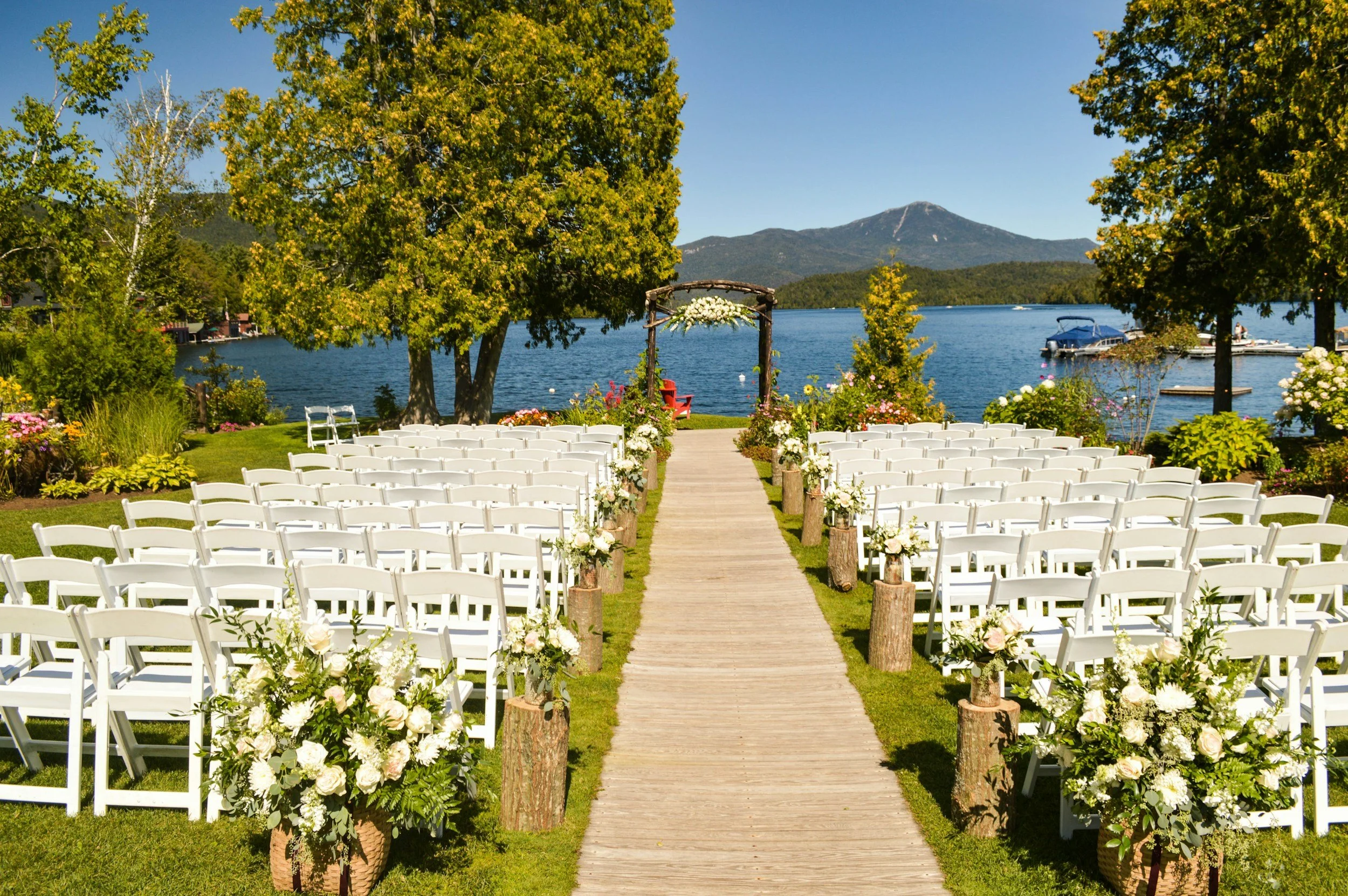
An accessible wedding venue allows guests to participate without having to navigate preventable barriers. Accessibility involves more than finding a building with a ramp. Parking, pathways, restrooms, seating, lighting, sound, food service, and emergency procedures can all affect whether a guest can attend comfortably.
Needs also vary. A feature that works for one person may not work for another, so combine a careful venue inspection with direct, respectful communication.
Ask Guests What They Need
Include an optional accessibility question on the RSVP form. Keep the wording open and practical, such as:
“Do you need any accommodations to participate comfortably in the ceremony or reception?”
Provide space for details and a private way to contact the couple or planner. A guest may need step-free access, a seat near the front, space for a mobility device, captions, an interpreter, dietary accommodations, or a quiet place to rest.
Do not ask guests to disclose a diagnosis or prove a disability. Focus on the arrangement they need. Follow up privately rather than discussing the request in a group message.
Inspect the Entire Guest Route
Do not rely only on a venue representative saying the property is accessible. Visit the site and examine the complete route a guest will use.
Start at the parking area or drop-off point and continue through:
The main entrance
Ceremony location
Cocktail area
Reception space
Dining tables
Restrooms
Outdoor areas
Transportation pickup point
Emergency exits
A step-free entrance is not enough if the accessible restroom is in another building or the reception is reached by stairs.
Walk the route at approximately the same time of day as the wedding. This can reveal poor lighting, heavy doors, crowded hallways, soft ground, or other problems that are less obvious during an empty daytime tour.
Check Parking and Drop-Off Access
Confirm that accessible parking spaces are available and located near an accessible entrance. Ask whether another event could use those spaces on the wedding day.
A covered or level drop-off area can help guests who cannot walk far, use mobility devices, or need extra time getting out of a vehicle. Keep the route free from decorative signs, equipment, parked vendor vehicles, and loose cords.
If the wedding uses a shuttle, verify its accessibility rather than assuming every bus can accommodate a wheelchair or other mobility device. Ask about lifts, securement systems, step height, storage, and advance reservation requirements.
Look Closely at Paths and Entrances
An accessible route should be stable, reasonably firm, and free from unnecessary obstacles. Gravel, deep grass, sand, steep slopes, narrow gates, and uneven stone can be difficult or impossible for some guests to cross.
For an outdoor wedding, ask whether the venue can provide appropriate temporary flooring. A decorative runner placed directly over grass is not necessarily a usable path.
Also check:
Door width and threshold height
Whether doors are heavy
Ramp condition and handrails
Elevator availability
Space for turning and maneuvering
Whether an accessible entrance remains unlocked
How guests will find that entrance
Accessible guests should not be sent through a loading dock or poorly marked service entrance unless there is genuinely no appropriate alternative.
Verify Restroom Accessibility
Visit the actual restroom rather than accepting that one is “nearby.” Confirm that a guest can enter, close the door, maneuver inside, reach the sink, and use the necessary fixtures.
Watch for trash cans, stored supplies, decorative tables, or diaper-changing equipment blocking clear space. Ask venue staff to inspect the restroom before guests arrive and keep the route unobstructed throughout the event.
For outdoor weddings using portable restrooms, reserve an accessible unit and place it on a firm, level route. It should not be located across grass, gravel, or a curb that prevents access.
Design a Flexible Seating Plan
Provide several seating choices instead of placing every guest with a disability in one designated area.
A guest may need:
Space for a wheelchair without transferring
A companion seat beside a wheelchair space
An aisle seat
A chair with arms
A firmer chair or added back support
Extra room for a walker
A location near a restroom
A seat away from speakers
A clear view of an interpreter or captions
Space for a service animal
Do not remove a mobility device from a guest without permission. Keep aisles wide enough for comfortable movement and make sure chair backs, floral arrangements, gift tables, and photography equipment do not narrow the route.
During dinner, remove a chair where a wheelchair user will sit rather than placing the wheelchair at the outer edge of the table. The guest should be part of the table arrangement, not positioned in a traffic lane.
Plan for Hearing and Communication Access
Ask the venue what assistive listening equipment is available and whether it works with the planned sound system. Test microphones and speakers during the rehearsal.
Depending on guest needs, useful accommodations may include:
Qualified sign language interpreters
Real-time captioning
Assistive listening devices
Printed copies of readings or speeches
Reserved seating with a clear view
Well-positioned speakers and microphones
Captions on prerecorded videos
ADA.gov explains that effective communication may require different aids depending on the person, the type of communication, and the setting. Do not assume that hearing aids eliminate the need for other support or that every deaf guest uses sign language.
Book interpreters or captioning providers early. Give them the ceremony script, names, readings, song titles, and speech notes in advance when possible.
Support Guests With Low Vision
Use clear signs with large, readable lettering and strong color contrast. Avoid highly decorative fonts for essential information.
Keep pathways well lit and free from low floral arrangements, candles, cables, and bags. Announce important transitions instead of relying only on signs or visual cues.
Digital schedules, menus, and venue information should be provided in formats guests can enlarge or use with assistive technology. A guest may also request large-print, electronic, Braille, or audio materials.
Ask before physically guiding someone with low vision. If assistance is wanted, let the guest take the helper’s arm rather than pulling or pushing them.
Prepare for Service Animals
Discuss service-animal access with the venue before signing the contract. Under the ADA, covered businesses generally must allow a trained service dog to accompany its handler in areas where members of the public are permitted, even when the property has a no-pets policy.
Venue staff generally may not require certification or demand that the animal demonstrate its task. Service animals also should not be treated as pets by guests or vendors.
Plan enough floor space so the animal can remain with its handler without being placed in an aisle. Ask the handler privately whether information about an outdoor relief area would be helpful.
Do not pet, feed, photograph, or distract a service animal without the handler’s permission. State and local rules may provide additional protections, while federal ADA rules contain specific definitions and exceptions.
Consider Sensory and Energy Needs
Weddings can involve loud music, flashing lights, crowds, fragrances, and long periods without a break. These conditions may be difficult for guests with sensory sensitivities, migraines, chronic illness, fatigue, or anxiety.
If possible, provide a quieter room or low-stimulation area with chairs and softer lighting. Make sure guests can enter and leave without drawing attention.
Other useful choices include:
Avoiding unnecessary strobe lighting
Warning guests about flashing effects
Keeping music at a manageable level during dinner
Offering fragrance-free areas where practical
Allowing guests to step out and return
Providing seating during long cocktail periods
Sharing the schedule in advance
A quiet space should not be used as a substitute for making the main event accessible. It is an additional option for guests who need a break.
Review Food and Beverage Arrangements
Ask about allergies, medically required diets, and other dietary needs through the RSVP process. Confirm how the caterer prevents mix-ups and identifies special meals.
Provide nonalcoholic beverages and water in locations guests can reach. Make sure buffet tables, beverage stations, and dessert displays can be approached by someone using a mobility device.
If self-service is difficult, staff should be prepared to assist. Train servers to ask what help is wanted instead of making assumptions.
Build Accessibility Into the Timeline
Allow enough time for guests to move between locations without rushing. A five-minute transition may not be realistic when guests must use an elevator or travel along a longer accessible route.
Avoid making the wedding party or guests stand for extended periods. Provide chairs during waiting periods, photographs, and transportation delays.
Tell the planner, venue coordinator, ushers, transportation provider, caterer, DJ, and photographer about the arrangements relevant to their roles. Accommodation details should be shared only with people who need them.
Create an Emergency Plan
Ask how the venue assists guests with disabilities during a fire alarm, severe weather event, elevator outage, or evacuation. Identify accessible exits and assembly areas.
Determine:
Who will provide assistance
Whether emergency exits include stairs
How guests will receive visual and audible alerts
What happens if an elevator cannot be used
Whether backup power is available
Where mobility devices and essential medical items will remain
Do not create a plan that depends on untrained guests carrying someone down stairs. Discuss safe procedures with the venue and the guest involved.
Put Every Commitment in Writing
Before signing the venue contract, document promised accessibility arrangements. List equipment, room assignments, temporary ramps or flooring, accessible restroom provisions, transportation, staff support, and setup times.
Reconfirm those details several weeks before the wedding and again during the final walkthrough. Ask who will be responsible for checking that accessible routes, seats, and restrooms remain clear.
Accessibility laws and building requirements vary by country, state, facility type, and religious status. Historic buildings may also present complications, but “historic” does not automatically answer what accommodations are required. Couples with legal or technical questions should consult the appropriate accessibility authority or a qualified professional.
An accessible wedding is not about predicting every possible need. It is about choosing a venue carefully, asking respectful questions, removing known barriers, and responding thoughtfully when a guest requests support.
This article provides general planning information and is not legal or architectural advice. Accessibility obligations vary by jurisdiction and venue type. Consult the appropriate government agency or a qualified accessibility professional about a specific property or legal requirement.
