
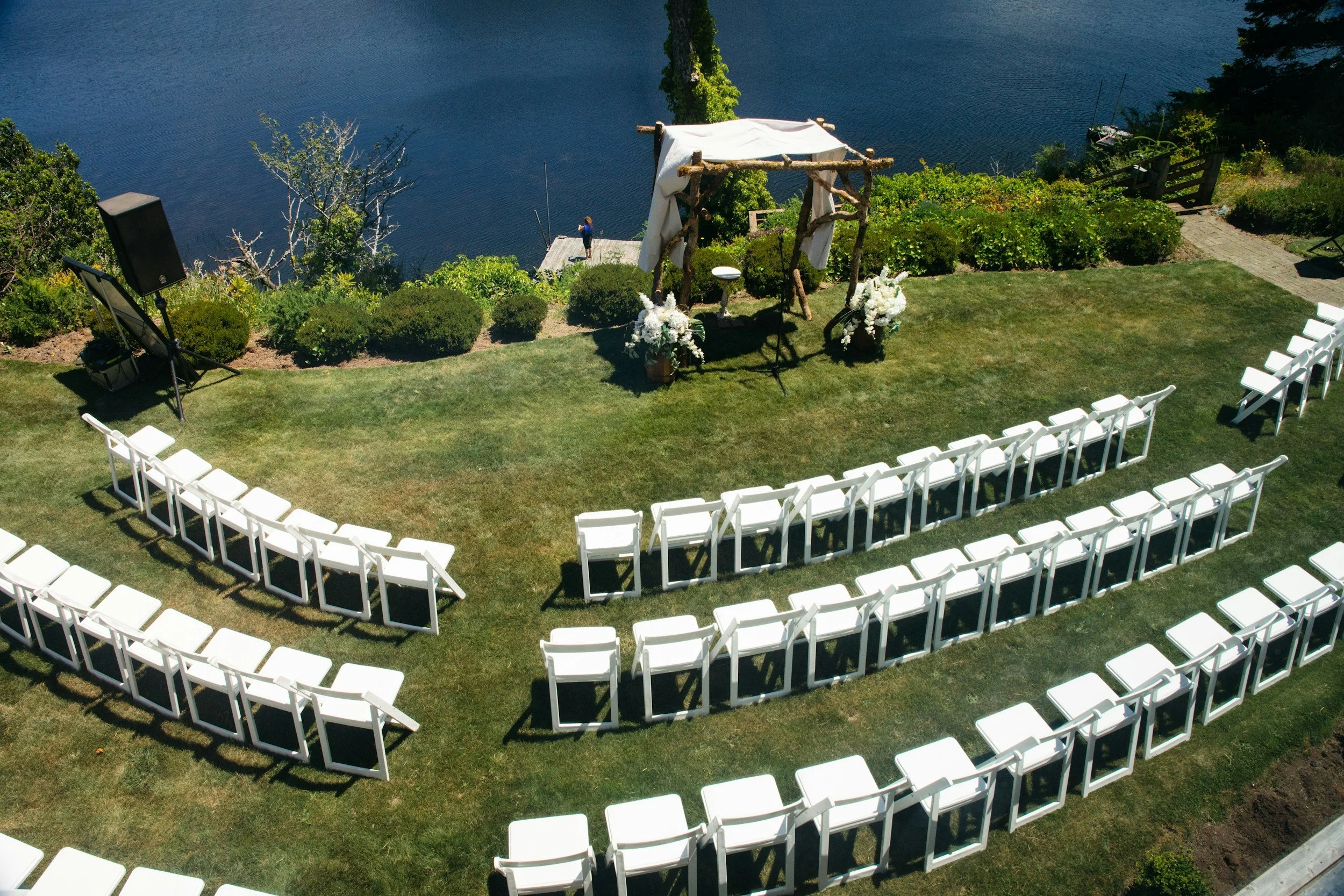
A wedding reception seating chart should do more than place the correct number of guests at each table. It should help people move through the room, communicate comfortably, and participate in the celebration without unnecessary obstacles.
Accessibility needs, family relationships, children, older guests, and caregiver arrangements can all affect where someone should sit. Addressing these details early can make the reception more comfortable while preventing last-minute table changes.
Begin With the Venue Floor Plan
Ask the venue for an accurate floor plan showing table sizes, exits, restrooms, bars, food stations, dance floors, and accessible entrances. Confirm the actual layout rather than relying only on photographs from previous weddings.
Check the space between tables and chairs. A layout may fit the venue’s maximum guest count while still being difficult for someone using a wheelchair, walker, cane, or other mobility aid.
The main travel paths should remain open after guests are seated and chairs are pulled away from the tables. Avoid placing decorations, signs, extension cords, or rental equipment in those paths.
Ask About Accessibility Privately
Couples should not guess which guests need accommodations. Add a brief question to the RSVP form or contact guests privately.
A simple question might ask whether the guest has any accessibility, seating, dietary, or communication needs that would help them participate comfortably.
Useful information may include:
Wheelchair or walker space
Step-free access
Seating near a restroom
A clear view of speakers or interpreters
Distance from loud music
Space for a caregiver or personal care attendant
Seating that limits unnecessary walking
Easy access to an exit
Room for a service animal
Only share this information with the planner, venue, or vendors who need it. There is usually no reason to identify a guest’s medical condition on the seating chart.
Make Room for Mobility Devices
Do not simply remove a chair and assume the table is accessible. Confirm that the guest can approach the table, turn comfortably, and remain seated without blocking an aisle.
A guest using a wheelchair may prefer a position that offers easy entry and departure without requiring several other people to stand. Someone who uses a walker may need room to keep it nearby rather than having staff move it across the room.
Ask the guest what arrangement works best. Some people prefer an aisle position, while others would rather sit in a protected area away from heavy foot traffic.
Consider the Distance to Important Areas
Seat guests with limited mobility reasonably close to the entrance, restroom, buffet, and other areas they may need to visit. However, avoid assuming that the closest table is automatically the best one.
A table near the entrance might also be exposed to drafts or constant traffic. A table beside the restroom may be noisy. Work with the guest and venue to find a location that balances access with comfort.
If the reception uses a buffet, ask whether venue staff can bring a meal to guests who would have difficulty standing in line or carrying a plate.
Pay Attention to Noise and Lighting
Tables next to speakers or the dance floor can be uncomfortable for guests with hearing aids, sensory sensitivities, migraines, or difficulty following conversations in noisy environments.
Place guests who need a quieter setting farther from speakers, musical equipment, and busy service stations. A quieter table can still have a good view of speeches and special dances.
Lighting also matters. Avoid placing guests with low vision in unusually dark corners. If candles provide most of the table lighting, confirm that menus, place cards, and table numbers remain readable.
Keep Caregivers and Support People Together
A personal care attendant, interpreter, or family caregiver should be seated with the person they support unless both guests request another arrangement. The support person may need to assist with communication, mobility, meals, medication reminders, or navigation.
Count support people in the final guest and meal totals. Confirm their seating and meal selections just as you would for other attendees.
If a guest brings a service animal, leave enough floor space for the animal to remain near its handler without being placed in an aisle.
Review Family Relationships Before Assigning Tables
Family considerations are not limited to keeping relatives together. Divorces, remarriages, estrangements, grief, and long-standing conflicts can influence whether a table feels comfortable.
Before placing guests, note any relationships that require thoughtful separation. This may include:
Divorced parents and their partners
Relatives who are not currently speaking
Guests involved in an active family conflict
Former spouses attending the same event
Family members with difficult histories
Guests who may feel isolated at an unfamiliar table
Separation does not need to be obvious. Place guests with people they know or share interests with rather than creating a table that appears designed around a conflict.
Handle Divorced Parents Thoughtfully
There is no universal rule for seating divorced parents. Some can comfortably share a table, while others should be placed separately.
Discuss preferences privately before finalizing the chart. If parents are seated at different tables, try to give each table a comparable view and level of importance. Avoid creating the appearance that one parent has been pushed to the edge of the room.
Partners and close family members can help create comfortable table groups. The couple should not feel responsible for resolving old family disagreements during the reception.
Consider Older Guests’ Comfort
Older relatives may appreciate a location with minimal walking and a clear view of the main events. They may also prefer a table away from speakers, cold air vents, or doors that repeatedly open.
Do not automatically group every older guest together. Seat people with companions they enjoy and consider differences in hearing, mobility, and energy.
If the reception extends late into the evening, place older guests where they can leave without crossing the dance floor or navigating crowded tables.
Decide How to Seat Children
Children may sit with their parents, at a separate children’s table, or in a combination of both arrangements. The best choice depends on their ages, maturity, and familiarity with one another.
Young children generally need to remain close to a parent or responsible adult. If high chairs or booster seats are required, confirm how they affect table capacity and aisle space.
Avoid placing a children’s table near exits, candles, serving stations, unstable decorations, or audio equipment. Assigning an adult nearby can help with meals and unexpected needs.
Avoid Creating an Isolated Singles Table
Relationship status alone is not a useful basis for seating. A table made up entirely of guests who do not know one another can feel forced or uncomfortable.
Instead, group guests by shared connections, interests, age range, or conversation style. Mix single and partnered guests when the group is likely to get along.
Make sure each table includes at least a few people who already know one another. This creates a natural starting point for conversation.
Use Assigned Tables or Assigned Seats Carefully
Assigned tables offer flexibility while ensuring guests have a place to sit. Assigned seats provide more control when meal selections, accessibility needs, or complicated family relationships are involved.
If using place cards, make them easy to read. Use clear lettering, strong contrast, and a practical font size. Table numbers should be visible from across the room.
Provide a large seating display or alphabetical escort cards near the entrance. Organizing names alphabetically is usually faster for guests than asking them to search a chart arranged by table.
Confirm the Final Layout With the Venue
Before printing the seating chart, send the arrangement to the venue, planner, and caterer. Ask them to review accessibility, table capacity, meal service, and staff movement.
Verify that:
Accessible paths remain clear
Mobility devices fit at assigned tables
High chairs are included
Caregivers are seated appropriately
Dietary meals are connected to the correct seats
Vendors can serve each table safely
Emergency exits are unobstructed
Extra chairs do not reduce aisle space
Keep a small amount of flexibility for late changes. A guest may cancel, a mobility need may change, or the venue may adjust the floor plan.
Create a Seating Plan That Supports the Celebration
A thoughtful seating chart does not need to make every guest perfectly happy. Its purpose is to create a safe, welcoming arrangement that supports conversation and participation.
Start with accessibility, then consider family dynamics and social connections. When guests can enter, move around, hear, see, and sit comfortably, they are better able to enjoy the reception.
